Languages That Have a Word for Things English Pretends Do Not Exist
15th May 2026
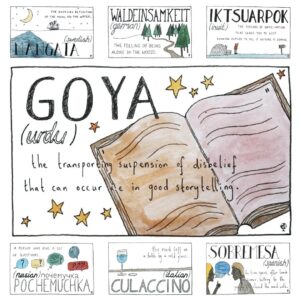
Some languages contain words that feel less like vocabulary and more like cultural windows.
Not because English cannot explain the same ideas.
But because other languages sometimes recognise certain emotions, experiences or social nuances strongly enough to compress them into a single word.
And in doing so, they reveal what a culture notices.
Saudade (Portuguese)
A famous example.
Saudade describes a deep emotional longing for something absent:
- a person
- a place
- a former life
- even a feeling that may never return
English can describe this state.
But Portuguese gives it permanence and emotional legitimacy through a single word.
Komorebi (Japanese)
Komorebi refers to sunlight filtering through the leaves of trees.
Not simply “sunlight through leaves,” but the specific atmosphere and visual feeling created by it.
The existence of the word reflects a cultural attentiveness to transient sensory detail.
Schadenfreude (German)
Perhaps the most internationally adopted example.
The pleasure derived from another person’s misfortune.
English speakers experience it perfectly well.
German simply formalised it first.
Sisu (Finnish)
A particularly difficult word to translate directly.
Sisu refers to a form of:
- quiet determination
- internal resilience
- stubborn endurance
Not dramatic courage.
Something calmer and harder.
A national characteristic distilled into language.
What These Words Reveal
Languages do not merely describe reality.
They organise attention.
What a culture repeatedly notices, values, fears or celebrates often becomes linguistically condensed over time.
The result is vocabulary that carries:
- emotional texture
- cultural history
- collective psychology
The Illusion of Direct Equivalence
This is also why translation is rarely mechanical.
Words may appear translatable while carrying very different emotional or cultural weight.
A literal translation may transfer meaning.
But not always atmosphere.
At Foreign Tongues, this distinction sits at the centre of international communication:
understanding not only what words mean, but what they carry.
Because language is never just vocabulary.
It is culture, compressed.
