The Word That Pretended to Be a Sentence
24th November 2025
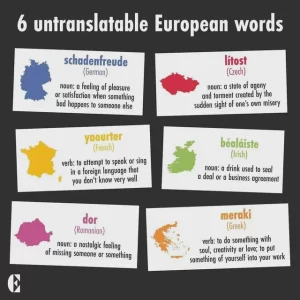
Some words behave themselves. Others go rogue.
Across the world’s languages, there exist single words that carry the weight, structure, tone and emotional colour of an entire sentence. They are linguistic matryoshka dolls, compact on the outside, unexpectedly elaborate within.
In English, we get hints of this phenomenon:
“Fine.”
“Really?”
“Seriously.”
Small words that, depending on tone, can mean anything from agreement to outrage.
But in many other languages, this is not a quirk – it is a full-blown linguistic feature.
When One Word Does the Work of Ten
Some languages pack grammatical information into a single word with incredible efficiency. Subject, tense, mood, intention, politeness level – all fused into one compact unit.
A literal English translation often looks absurd:
- “I-will-go-if-you-really-want-me-to-but-I’m-not-sure”
- “You-should-have-told-me-earlier-(I’m-a-bit-annoyed)”
- “We-all-remember-it-but-pretend-not-to.”
These “sentence-words” work beautifully inside their native languages. But when confronted with English, a language that likes its meaning spread out neatly across several words, the compact brilliance collapses into something flat, wooden or comically over-explained.
This is where translation becomes art rather than mechanics.
The Real Challenge: Tone, Not Words
If a single word expresses a reaction, a relationship dynamic, a social expectation and a cultural nuance simultaneously… how do you translate that?
You do not replicate the structure. You replicate the effect.
Because meaning is not transferred through vocabulary. It is transferred through impact.
What Foreign Tongues Does Differently
At Foreign Tongues, we specialise in understanding when a text is using language economically and when that economy hides emotional complexity. A one-word reaction in another language may require a small paragraph in English to convey its intent faithfully.
And the other way around, English’s occasional minimalist utterances sometimes need expansion to land naturally with readers from different linguistic backgrounds.
Translation is not simply carrying words across. It is carrying experience across.
And sometimes, that means recognising when a “word” is not really a word at all…
but an entire sentence wearing a very good disguise.
