7 Words English Should Have (But Does Not)
26th November 2025
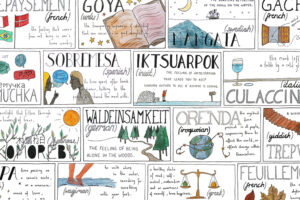
Every language carries hidden shortcuts, subtle words that capture complex ideas, feelings or social nuances in a single breath. English is rich, but sometimes it feels… blunt. Labour-intensive. Spread out.
Imagine, instead, having a vocabulary where one word could speak volumes: express regret, longing, a social mood or a subtle shade of emotion.
Some of the world’s languages already do. Here are seven words English does not have but perhaps should:
- Wabi-sabi (Japanese) — the poignant beauty of imperfection and transience; the charm in the melancholic, the wonderful melancholy in things that age, fade or wear.
- Mbuki-mvuki (Bantu, Congo) — to fling off one’s clothes and dance uninhibited when joy takes over; a spontaneous celebration of abandon that needs no reason.
- Uitwaaien (Dutch) — a brisk walk in the wind for the sole purpose of clearing one’s head; mental reset in atmospheric form.
- Iktsuarpok (Inuit) — that indescribable urge to keep checking if someone is coming; hope, anticipation, a subtle ache in mid-impatience.
- Sobremesa (Spanish) — the space after a meal where conversation lingers, time feels softer and presence becomes more important than purpose.
- Jayus (Indonesian) — a joke so poorly told or so badly timed that you laugh anyway; laughter born from shared discomfort, not polish.
- Saudade (Portuguese) — the sweet, aching memory of someone or something gone; a nostalgia rich in both sorrow and warmth, longing and love.
Why does this matter for translation, research and understanding culture? Because when English speakers try to capture these nuances, they often fall back on long explanations, metaphors or approximations; and in doing so, risk diluting the emotional clarity of the original.
At Foreign Tongues, we believe in restoring the richness languages were built to hold. When we translate for Clients – surveys, reports, transcripts – we do not just swap words. We hunt for meaning. Sometimes that means expanding a single word into a phrase, sometimes condensing a paragraph into a single, elegant term.
Because language is not just for communication. It is for capturing life’s texture.
And when you encounter a sentiment that lacks a word in English, it is not a gap, it is an invitation.
Let us take it.
