Lost in Translation: How One Misworded Survey Question Can Cost You a Million Pounds
7th August 2025
It sounds dramatic — but it happens more often than you think.
A global brand commissions multi-market research, spends six figures on fieldwork and then… discovers that one of the key questions was misunderstood in a major market. The result?
- Skewed responses
- Invalid comparisons
- Misguided business decisions
- Wasted budget
And yet, the culprit was something entirely preventable: poor translation.
At Foreign Tongues, we know that market research translation is not about accuracy alone — it is about insight preservation. A single badly translated term can distort entire projects.
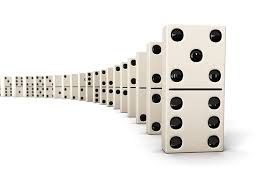
The Domino Effect of a Single Mistranslation
Let us imagine a brand asking consumers:
“How often do you treat yourself?”
Sounds simple enough.
But when translated literally into German, the word “treat” may be interpreted medically (“Behandlung”) — or formally, like “rewarding oneself after a major milestone.”
The cultural nuance of “a little indulgence” — a takeaway meal, new shoes or an impulse purchase — is gone. Respondents answer through a completely different lens. The data says consumers rarely “treat” themselves. The Client pulls their campaign.
Opportunity missed. Budget wasted. Insight compromised.
The Myth of the ‘Fluent Translator’
Many research teams assume any fluent speaker can translate a survey. After all, it is just words… right?
Wrong.
Effective research translation requires:
- Subject matter knowledge
- Awareness of methodology (quant, qual, online, CATI, etc.)
- Familiarity with tone calibration
- Cultural interpretation — not just language matching
Without this, you do not get multilingual data. You get mismatched data.
Why Foreign Tongues Does Not Cut Corners
We are not a generalist agency. We are built around the specific needs of market research translation — and that means:
✅ Native linguists who also understand research methods
✅ Editors who ask not “is this correct?” but “does this land as intended?”
✅ Sector-matched tone for B2C, B2B, healthcare, UX and more
✅ Multimarket consistency without linguistic laziness
Why It Pays to Think Before You Translate
Let us be real: Clients rarely notice great translation.
But they always notice bad results.
Poor translation leads to:
- Invalid comparisons between markets
- Lower respondent engagement
- Poor-quality open ends
- Frustrated fieldwork teams
- Damaged Client trust
For the cost of a small percentage of your research budget, you can avoid these outcomes entirely.
In Research, Translation Is Not Admin. It Is Strategy.
At Foreign Tongues, we think of translation as the quiet backbone of reliable international research. It is not an afterthought — it is a core step in safeguarding your findings.
So before you launch your next global project, ask:
- Who is translating my materials?
- Are they just linguists — or research specialists?
- What are the risks if they get it wrong?
Then give us a call.
