The ESOMAR Global Market Research Report 2026 Tells an Interesting Story – But One Detail Deserves More Attention
29th July 2026
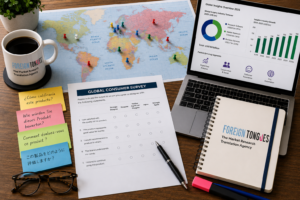
Growth is encouraging. Comparability is essential.
When ESOMAR publishes its annual review of the global insights industry, most readers understandably focus on the rankings, acquisitions and growth figures.
This year’s report paints a picture of an industry that continues to evolve despite economic uncertainty.
Among the headline observations are:
- The global insights industry is expected to be worth around US$166 billion, with research software representing the largest share of the market.
- Full-service market research continues to show resilient growth, while digital data analytics remains one of the fastest-growing segments.
- Consolidation through mergers and acquisitions appears to be returning after a quieter period.
These are important indicators.
But they also prompted me to think about something that rarely appears in league tables or financial reports.
The value of research depends on one assumption.
That respondents in different countries have understood the same question in the same way.
It is an assumption that is easy to overlook.
Yet it underpins every international study.
As our industry becomes increasingly global, multilingual and technology-enabled, ensuring conceptual consistency becomes even more important.
Translation has never been simply about replacing one word with another.
It is about preserving meaning across cultures.
A questionnaire may be translated perfectly from a linguistic perspective and still fail to generate truly comparable data if respondents interpret the underlying concept differently.
That is why experienced international researchers increasingly involve language specialists much earlier in the research design process.
Not because translation is a risk.
Because comparability is.
The ESOMAR report rightly celebrates innovation, growth and technological advancement.
Alongside those developments, I would suggest that our industry should continue giving equal attention to another measure of quality:
Can we be confident that respondents in every market are answering the same question?
If the answer is yes, international research becomes genuinely comparable.
If the answer is no, even the most sophisticated analytics cannot fully compensate.
For me, that is one of the most important conversations in global research today.
Brendan Reaney
Managing Director
Foreign Tongues – The Market Research Translation Agency
