When the Right Answer Comes from the Wrong Question
4th August 2026
Every experienced researcher knows the frustration.
The data is impeccable.
The sample is representative.
The analysis is statistically sound.
And yet the conclusions somehow feel… wrong.
Often, the problem did not begin with the answers. It began with the question.
The smallest linguistic ambiguity can travel through an entire research project unnoticed. A word that feels perfectly natural in English may carry a subtly different meaning elsewhere. A scale that appears balanced in one language may encourage different response behaviour in another.
Research professionals spend enormous effort eliminating bias from methodology. Yet linguistic bias can be just as influential.
Imagine asking respondents whether a product is “good value”. In one market that phrase suggests affordability. In another it implies durability. Somewhere else it may be interpreted as prestige.
Every respondent answers honestly.
Every dataset is technically correct.
But they have not all answered the same question.
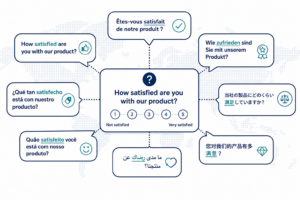
That is why multilingual research is never simply about translation. It is about preserving intent.
When every market interprets a question in precisely the same way, researchers gain something far more valuable than accurate wording, they gain comparable insight.
As research becomes faster and more global, this distinction becomes increasingly important. Speed helps deliver projects. Shared understanding helps deliver confidence.
At Foreign Tongues, we believe language should never become an invisible source of research error. Every questionnaire deserves to ask exactly the same question, wherever in the world it is answered.
Because the quality of international insight begins long before the first response is collected.
Brendan Reaney
Managing Director
Foreign Tongues – The Market Research Translation Agency
